

Stop Waiting on Your Heaters: Why IR Beats Forced Air in Wafer Processing
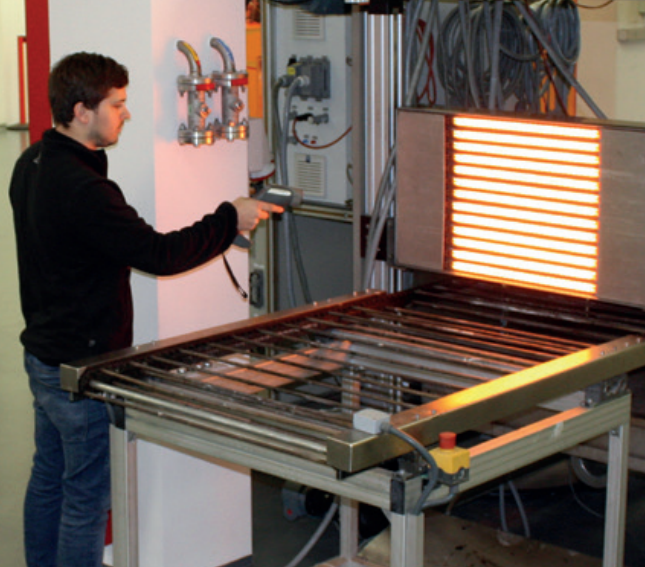
If you’ve spent any time in semiconductor deep processing, you know the frustration of the “wait.” Most of us are used to forced air. You blow hot gas across a surface and hope for the best. But here’s the problem: it’s slow. You’re waiting for the air to get hot, and then you’re waiting for that heat to actually soak into the silicon. It feels like watching paint dry while your production clock is ticking. The secret is skipping the middleman. With IR heating, we aren’t messing around with air. We’re using electromagnetic radiation to hit the wafer surface directly. It happens at the speed of light. You don’t sit around waiting for a chamber to “warm up.” You flip the switch, and the wafer absorbs that energy instantly. For an engineer, this is a huge win. If your old air setup takes ten minutes to stabilize, a precision IR system can usually do it in seconds. That’s a massive amount of time you just got back in your day. Keeping it steady Of course, speed is scary if you can’t control it. Nobody wants to fry a batch because of a random temperature spike. That’s why we use IR sensors to keep a constant eye on things. The system watches the surface temperature in real-time and tweaks the power on the fly. It keeps things smooth. In this line of work, a 5-degree jump can ruin everything, so having that safety net is a relief. And as a bonus? Your floor space opens up. You can toss out those clunky blowers and the maze of ducting that usually takes up half the room. The catch Now, it’s not magic. IR has a quirk: it’s directional. Hot air wraps around a part like a blanket, but IR is line-of-sight. If your wafer has a complex shape or you’re dealing with stacked dies, you’re going to get cold spots. You have to be really intentional about where the lamps go and how the reflectors are angled. If you get the alignment wrong, the wafer warps. It takes a bit more planning upfront, but once you nail the geometry, the speed makes it worth the effort.