


Stop Letting Lamp Bursts Kill Your Bio-Sensor Yields
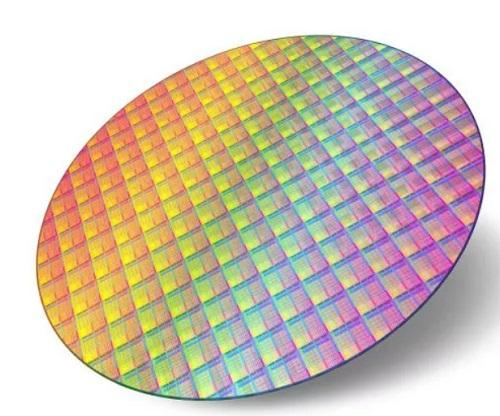
In bio-sensor fabrication, a lamp bursting isn’t just a headache or a bit of downtime. It’s a disaster. When a quartz tube gives out under a heavy load, you aren’t just dealing with a broken bulb. You’ve got shards of glass and chemical residue raining down on your wafer surface. It’s a nightmare for contamination. That’s exactly why we built our infrared lamps the way we did—to keep your high-throughput lines actually running. Keeping the mess inside We start with high-purity fused quartz for the envelope. Why? Because it can take the thermal shock of rapid cycling without cracking, whereas standard glass just can’t keep up. But we didn’t stop there. To make sure a burst doesn’t wipe out an entire batch, we add a protective sleeve or a specialized coating. Think of it as a safety net. If the inner filament fails, the fragments stay trapped inside the sleeve. You still get all the heat density you need for curing, but you don’t have to worry about debris landing on your sensors. Handling the heat Running these lamps at high wattage gets hot. Really hot. Most lamps fail at the ends—the “end-cap blowout.” We fixed that by beefing up the electrodes and seals. We use reinforced seals that hold a vacuum even when the metal is expanding under extreme heat. Just a heads-up, though: if you push for maximum wattage, your power supply and cooling manifolds are going to feel it. If your cooling system isn’t built to handle the total heat output, the tube temperature will climb, and your lamps will burn out way faster than they should. Cleanroom reality Then there’s the electrical side of things. We’ve designed our connectors to fit tight. That might sound like a small detail, but loose connections cause electrical arcing. Arcing creates tiny particles, and in a cleanroom, particles are the enemy. By using precision-fit terminals, the current stays stable and the air stays clean. Plus, they’re easy to swap. When it’s time for maintenance, you can just drop in a replacement and get back to work without taking up half the room or wasting hours of uptime.