
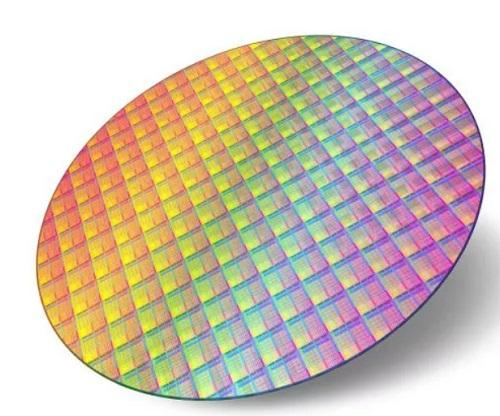
Out on the fab floor, you know how it goes. A photoresist bake profile that drifts even a fraction of a degree can send critical dimensions off spec and wipe out an entire lot. Wafer thermal control isn’t just another parameter—it’s the line between making yield and making scrap. We built our infrared quartz lamps to hold that line, delivering repeatable heat exactly where the process needs it. What matters, technically, is straightforward. These lamps use short-wave infrared from high-purity quartz to dump energy directly into the target. Less thermal inertia means faster response. Uniformity across the wafer holds within ±0.1°C across the illuminated zone, so the soft bake pulls solvents evenly and the hard bake sets the photoresist without skewing the edge bead. Output stays stable for 5,000+ hours with under 5% drop, keeping the thermal budget consistent lot after lot. And in Class 1–100 cleanrooms, the low-particle design and sealed envelope keep outgassing and contamination under control. Here’s why it plays well in lithography and etch. The same lamp handles both soft bake and hard bake with tight setpoint repeatability, which cuts rework and tightens overlay. Fast ramp-up shortens bake time, so you push throughput without spiking peak temperatures that can stress the stack or collapse patterns. Energy use drops because the heat goes where it’s supposed to, not into heating fixtures. And you get fewer surprises on the line—filament architecture is solid and maintenance intervals are predictable, so uptime stays steady. A couple of practical notes. Installation comes down to reflector alignment and cooling airflow. Get those wrong, and you’ll see local hot spots and uniformity drift. The lamp works with most standard chucks and fixtures, but if you’re integrating into legacy tools, expect minor tweaks at the thermal interface. Over long production runs, plan on periodic calibration checks to keep that ±0.1°C spec where it needs to be.