

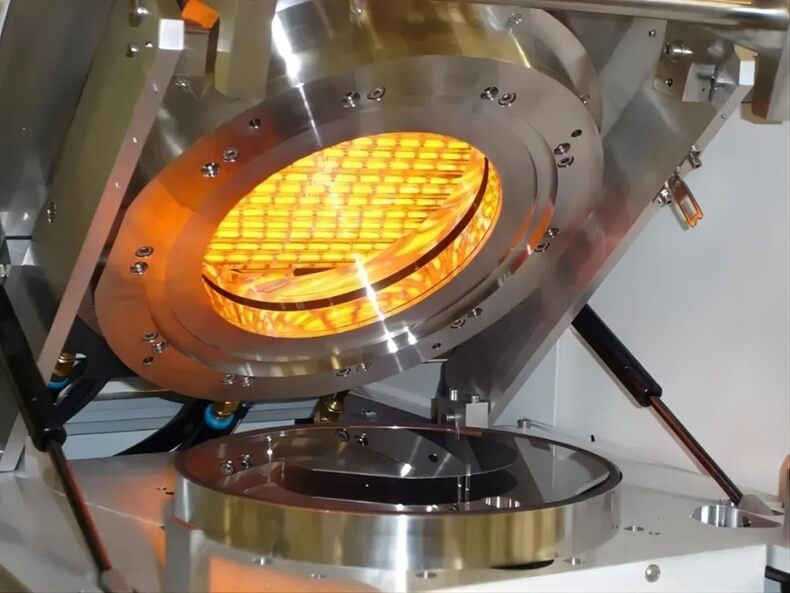
On the fab floor, yield often comes down to temperature. A half-degree drift during photoresist bake can print a line-width error that survives etch and deposition. In wafer-level CSP lines, the same thermal budget controls underfill cure and solder reflow. What you need is heat that repeats—cycle after cycle—without shifting the thermal center. Here’s what matters technically. We built the wafer-level CSP heater around tight thermal control: ±0.1°C setpoint stability and across-wafer uniformity, delivered with short-wave infrared elements and quartz-isolated heating zones. The system fits Class 1–100 cleanrooms, uses low-outgassing materials, and keeps the chamber sealed so particle count stays flat. Zero particle generation isn’t a slogan—it’s the design target. Each zone is closed-loop controlled, so soft bake, hard bake, and cure profiles follow the recipe, not the room. Why it works in practice. Use it for wafer drying, photoresist baking, encapsulant curing, and post-clean drying. In lithography, it runs soft bake and hard bake with repeatability that keeps CD and sidewall angle within spec. In packaging, it cures encapsulants and preps solder for reflow without thermal overshoot that can delaminate low-k stacks. The payoff is fewer rework lots, a stable defect pareto, and cycle times you can bank on. It’s efficient because the mass is small and response is fast, and uptime is supported by modular zones and field-replaceable elements. A few things to keep in mind. The heater is compact and integrates into standard tracks and coaters, but alignment to the wafer plane is exacting. Plan for sub-millimeter mechanical datum, and verify your thermal budget at the wafer edge—that’s where the margins are thinnest. Running under a nitrogen purge improves repeatability on moisture-sensitive recipes and extends element life.