
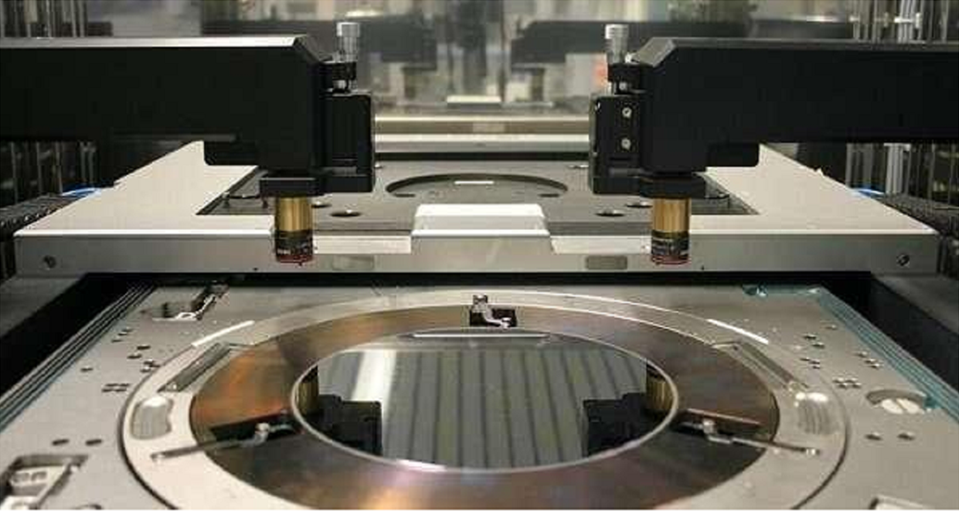
On the fab floor, a 0.1°C drift across the wafer can shift a critical dimension by nanometers—and watch your particle counts climb. The usual hotplates and convection ovens have a hard time holding thermal uniformity through soft bake and hard bake without slip, outgassing, or resist skin issues. That’s exactly why the near infrared (NIR) wafer dryer was built: to solve that specific constraint. What matters, technically NIR heats the wafer directly, not the chamber. You get wafer-level uniformity within ±0.1°C across 300 mm, sub-second response, and tighter control of the thermal budget. Photoresist profiles stay repeatable lot to lot, and bake profiles hold steady even when batch sizes change. The system is engineered for cleanroom Class 1–100, with zero particle generation at the point of contact and exhaust routing that keeps contaminants out of the process zone. Reliability here is measured in uptime—24/7 operation without unplanned stops, and heater life that pushes replacement intervals well beyond the typical quarterly cycle. Here’s why it works in lithography. You need consistent soft bake to pull the solvent out properly, and a predictable hard bake to set the resist without reflow. NIR gives you that consistency, with temperature settling fast, shorter cycle times, and lower energy draw per wafer. The payoff is process latitude: fewer reworks, tighter CD control, and less scrap driven by thermal non-uniformity. It also fits advanced nodes, where thermal margins are thin and every degree matters. A few practical notes before you spec it. NIR needs direct line-of-sight to the wafer and a controlled reflectivity path, so integration has to account for wafer handling geometry—especially any multi-stack boats that can shadow the beam. You also need clean power with controlled line ripple to keep spectral stability. Once those conditions are met, the dryer runs as a set-and-forget thermal stage. But get the initial layout right—there’s no skipping that step.