
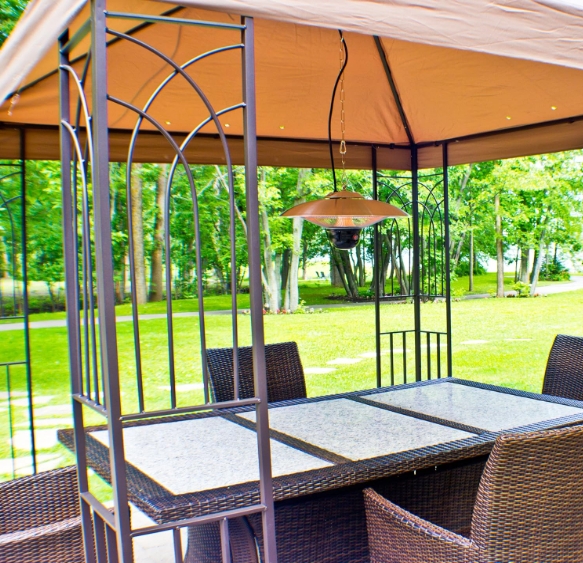
Why we built our outdoor heaters to be taken apart
Let’s be honest: the outdoors is brutal on gear. Between the rain, the dust, and those wild temperature swings, your heating elements are basically fighting a losing battle from day one. Eventually, something is going to burn out. Usually, that’s where the nightmare starts. Most outdoor heaters are built like sealed vaults. When a tube pops after a few years, you’re stuck dealing with weird proprietary screws or glue that wasn’t meant to be undone. Most of the time, you just end up tossing the whole heavy chassis into a dumpster because it’s too much of a headache to fix. We thought that was crazy. So, we did things differently. The “Drop-In” Approach Instead of building a sealed box, we went with a modular setup. Think of it like a cartridge. The heating module lives inside the IP65 weather-proof shell, but it isn’t married to it. If a tube goes, you don’t have to tear the whole machine apart. You just pull the dead element out and slide a fresh one in. It’s fast. Really fast. Keeping the Rain Out Now, the tricky part is keeping that “waterproof” promise (IP65) once you’ve actually opened the unit. If water leaks into the electrical terminals during a repair, you’ve got a bigger problem on your hands. To fix this, we used compression gaskets and seals that fit together perfectly. When you swap the tube, the seal just snaps back into place on its own. We also use high-grade quartz tubes with reinforced ends so they can expand and shrink as they heat up without cracking. No soldering, no fancy tools. You just disconnect the lead, swap the tube, and wire it back up. Done. The Trade-off Here is the catch: modular heaters take up a bit more room inside. They have a slightly larger footprint than those permanently welded units. But honestly? That’s a price worth paying. Compare the two scenarios. You can either have your crew lug around a 20kg heater and spend four hours fighting with a teardown, or they can carry a 500g replacement tube in their pocket and finish the job in ten minutes. When you’re managing a big outdoor space, that’s the only way to keep things running without spending a fortune on labor.